Legacy Product Modernization Through Reverse Engineering
By reverse engineering surfaces and physical parts that have little or no design documentation, 3D Engineering Solutions can modernize legacy products. If a component’s initial design intent has been partially lost as a result of production process variation or tool degradation or Diminishing Manufacturing Sources and Material Shortages (DMSMS), this process can help identify and correct problems.
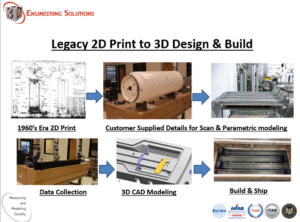
Once we collect detailed 3-dimensional data from your legacy product, CAD models can be easily created to facilitate changes, corrections and upgrades to product or tooling design. This accelerates the iterative process by which today’s products and processes are modernized and improved.
When legacy product or tooling is poorly documented by dimensional drawings, conventional measurement tools aren’t adequate when complex 3D shapes are involved. Our non-contact inspection process solves this problem without damaging or altering your product or tools in the process.
Explore our professional 3D reverse engineering services
Benefits of Product Reverse Engineering
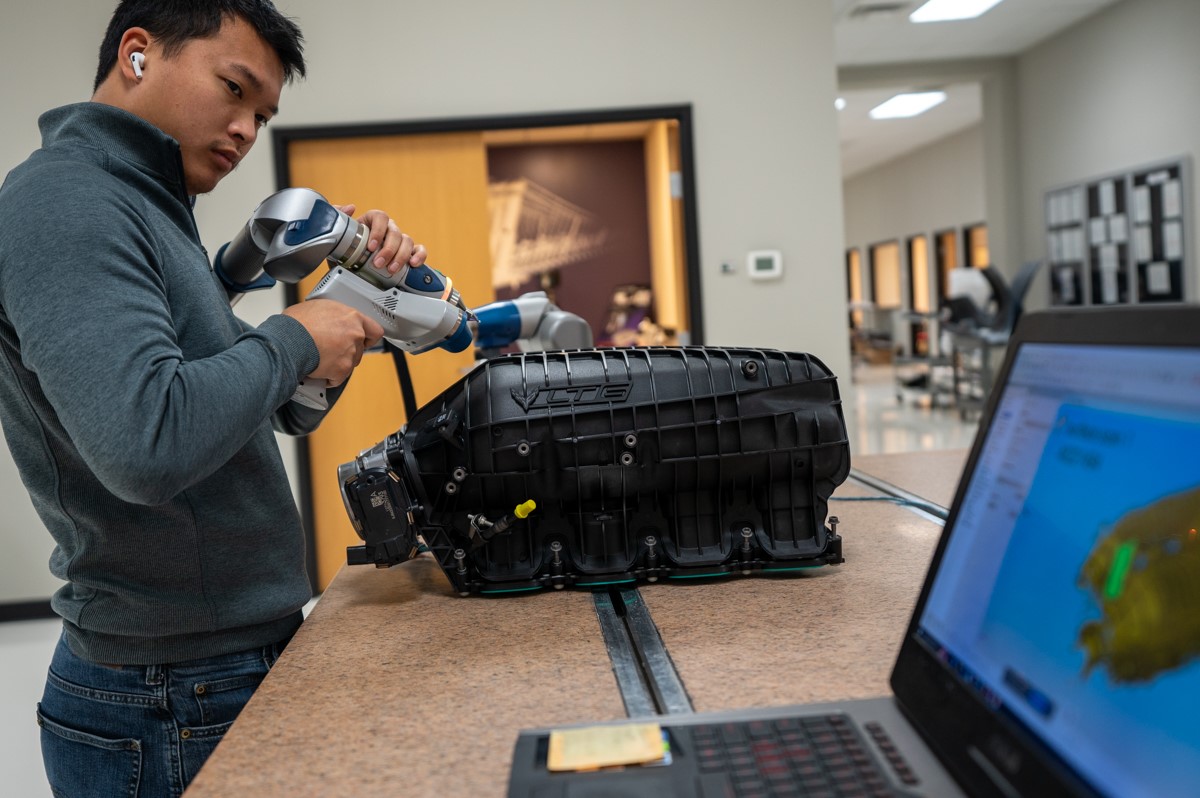
Reverse engineering gives manufacturers a reliable path forward when original documentation is incomplete, lost, or was never created. By capturing accurate 3D data from physical components, our engineers can reconstruct design intent from the part itself rather than relying on outdated drawings or institutional memory.
The benefits extend well beyond simple documentation recovery. Once an accurate digital model exists, design changes become far more manageable. Engineers can evaluate dimensional variation across multiple parts, identify where manufacturing drift has occurred over time, and determine whether tolerances need to be updated before production resumes. This is especially valuable when tooling has degraded gradually and the cause of dimensional variation is not immediately obvious.
Additional benefits of reverse engineering for modernizing legacy products include:
- Reduced development time by eliminating the need to reconstruct drawings from scratch
- Improved dimensional accuracy through measured data rather than assumed or estimated geometry
- Greater confidence when making design changes, because modifications are based on actual part geometry
- The ability to update materials or improve manufacturability without losing original functional intent
- Resolution of long-standing performance issues tied to undocumented design changes made in production
- Extended service life for critical products and tooling that would otherwise require full replacement
For organizations dealing with DMSMS challenges, this process is particularly practical. When a supplier is no longer available or a material is no longer produced, supply chain disruptions can halt production entirely. Reverse engineering provides the dimensional and geometric data needed to qualify alternative sources or adapt the design for currently available materials and manufacturing methods.
Learn key steps in the 3D reverse engineering process
Our Legacy Product Modernization Process
Data Capture
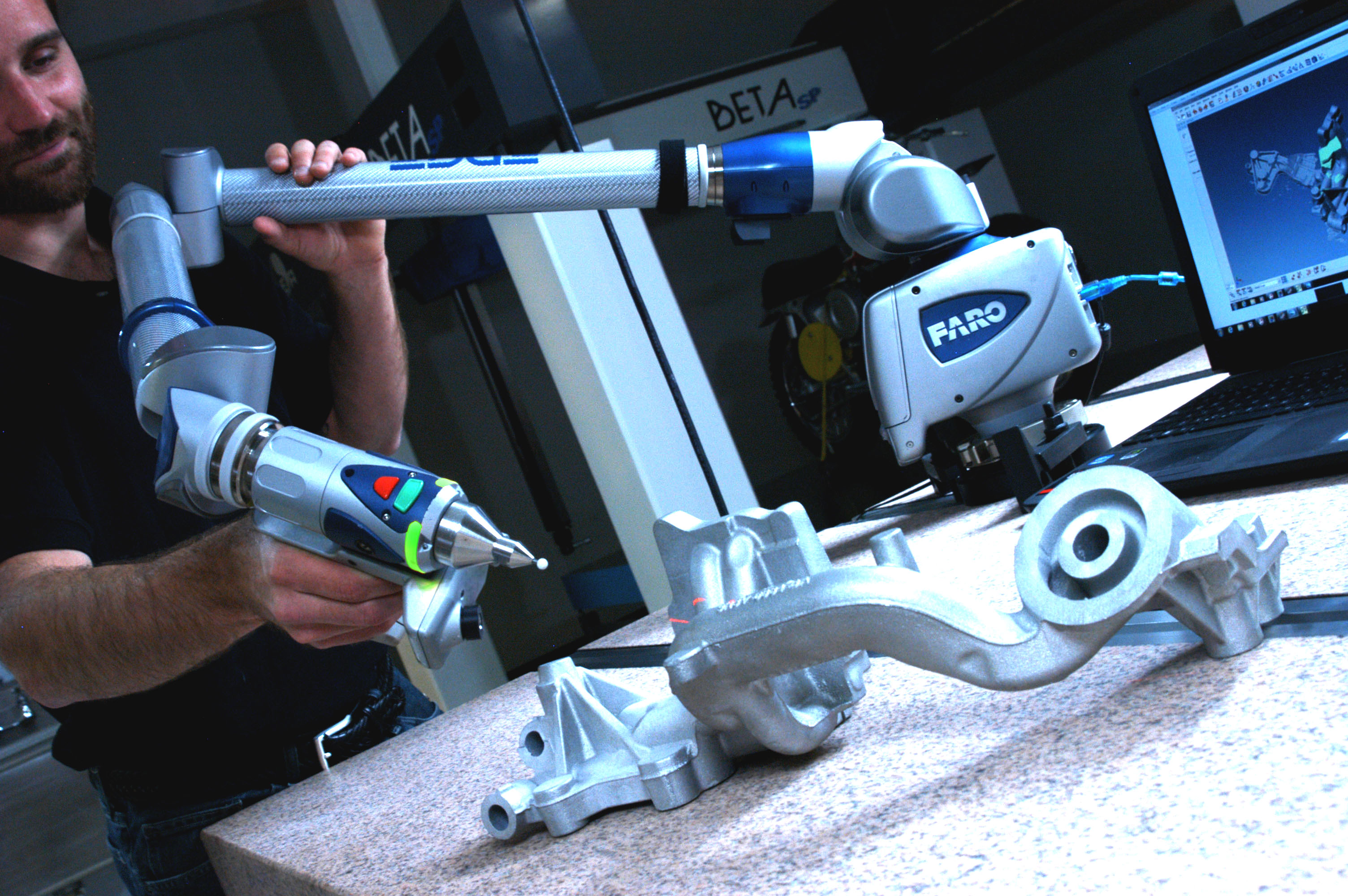
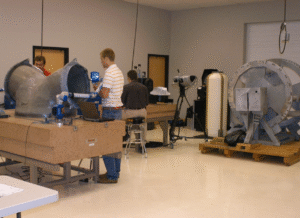
Our process begins with data capture. We use non-contact 3D scanning and precision inspection technologies to measure complex geometries accurately, including parts that are fragile, worn, or difficult to fixture. Depending on the part requirements, we draw from our full range of scanning technologies: laser scanning, structured light scanning, industrial CT scanning, high-precision CMMs, and large-area gantry CMMs.
Most of our scanning processes are listed under our ISO 17025 scope of accreditation. Unlike a general quality management certification, ISO 17025 requires that each specific measurement method be individually evaluated and approved by an accrediting body. This means the scanning processes we perform have been formally reviewed for technical competence, measurement uncertainty, and traceability to recognized standards.
CAD Modeling
Once scanning is complete, the data is processed into a high-fidelity CAD model. We work in Siemens NX, SolidWorks, Creo, or Revit depending on your requirements, and we compare all finished CAD models directly against the raw point cloud or voxel data sets using scan-to-CAD comparison analysis. This step confirms that the model accurately represents the physical part before any engineering work proceeds.
Engineering Analysis
From there, our engineers evaluate the model for dimensional variation, wear patterns, and manufacturing drift. We have engineers certified in tolerance stacking and Geometric Dimensioning and Tolerancing (GD&T), which gives us the background to interpret what a part measures, what the original design intent likely was, and where it may have deviated over time. Tolerance optimization, material updates, and design corrections are developed with that context in mind.
Deliverables
Final deliverables typically include fully parametric or surface CAD models, detailed dimensioned and toleranced drawings, and scan-to-CAD comparison reports. When your project involves tooling, we can also generate tool and die designs directly from the surface models we create.
View our process tool and design engineering solutions
Collaboration
Throughout the process, we involve our customers as collaborators. We are the measurement and modeling experts; our customers are the experts on their specific application and design intent. That exchange of knowledge consistently produces better outcomes than either party working in isolation.
Common Applications for Modernizing Legacy Products
Legacy product modernization applies across a wide range of industries and situations. The most common driver is the loss of original documentation, whether through supplier transitions, facility changes, decades of informal production adjustments, or DMSMS conditions affecting military and defense programs.
Typical applications include:
- Updating aging industrial equipment where original OEM support is no longer available
- Modernizing aerospace and automotive components to meet current material or performance requirements
- Recreating discontinued tooling, stamping dies, or injection molds from worn physical samples
- Adapting legacy designs for new suppliers or manufacturing methods without full redesign
- Supporting DOD and defense programs where legacy military equipment requires dimensional verification and updated documentation
- Resolving production inconsistencies caused by undocumented changes made to tooling over years of use
For defense and government work, we are ITAR registered and employ only U.S. citizens. We also hold a Federal Firearms License (Type 07 Manufacturer FFL) and a Federal Explosives License (Type 20 manufacturer FEL), which allows us to apply our reverse engineering capabilities to firearms and energetic device programs.
Whether your need is a single worn component or an entire product line with missing documentation, our staff of degreed engineers has the equipment, accreditation, and experience to take the project from physical part to production-ready CAD output.
3D Scanning Technologies Used in Legacy Product Modernization
| Scanning Method | Best For | Typical Accuracy | Common Output |
|---|---|---|---|
| Laser Scanning (Short Range) | Machined parts, tooling, dies with fine detail | 0.0002″ to 0.0035″ | Point cloud, STL, CAD model |
| Laser Scanning (Long Range) | Large assemblies, structures, facility layouts | ~0.0800″ or better | Point cloud, Revit model |
| Structured/White Light Scanning | Complex organic shapes, surfaces, castings | 0.0002″ to 0.0035″ | STL, point cloud, CAD model |
| Industrial CT Scanning | Internal geometry, assemblies, voids, DMSMS analysis | Part-dependent | Voxel data, 3D volume, dimensional report |
| High-Precision CMM | Tight-tolerance prismatic features, verification | 0.0001″ to 0.0003″ | Dimensional report, CAD comparison |
The 3D Engineering Solutions Advantage
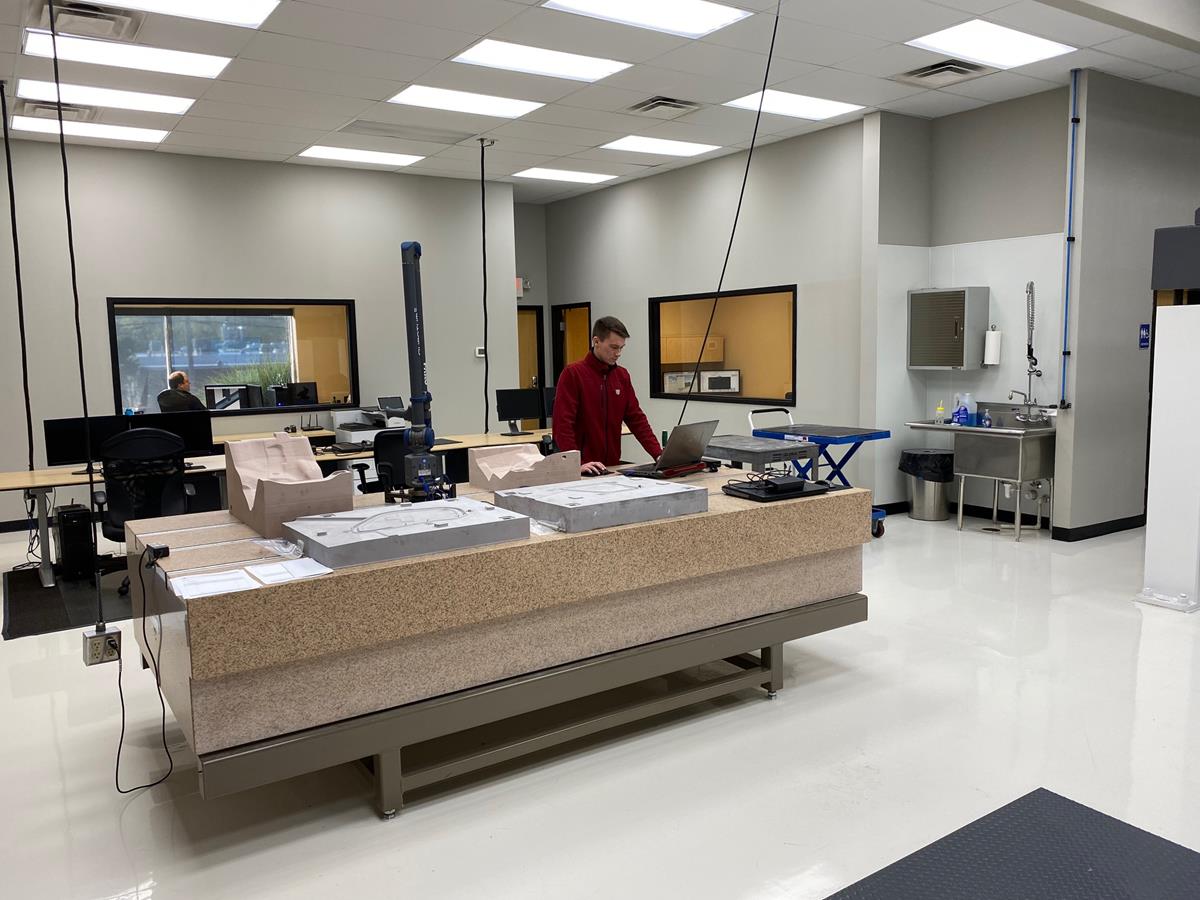
3D Engineering Solutions brings together the equipment, certifications, and engineering depth needed for legacy modernization work that demands accuracy. Our 24,000-square-foot facility in Cincinnati, Ohio houses a temperature-controlled metrology lab with a full range of contact and non-contact measurement instruments. With more than 150 years of combined industry experience on our team, including 30 years in quality assurance management, we have handled projects across nearly every manufacturing sector.
Here’s what sets us apart:
- Degreed engineers across all roles, with certifications in GD&T, tolerance stacking, and NAS410-level CT scanning
- ISO/IEC 17025 accreditation covering most of our scanning processes
- Multiple redundant pieces of equipment per scanning technology, providing capacity and flexibility for large and time-sensitive projects
- CAD output in Siemens NX, SolidWorks, Creo, or Revit, matched to your preferred platform
- ITAR registration and U.S.-citizen-only staff for defense and government programs
- 24/7 availability for projects with tight timelines
Contact us today to discuss your legacy product modernization requirements.
Frequently Asked Questions
What is legacy product modernization?
Legacy product modernization is the process of updating existing products, components, or tooling using reverse engineering, 3D scanning, and CAD modeling to overcome obsolete designs, missing documentation, or manufacturing limitations.
What is the timeline for reverse engineering a legacy product?
The timeline for reverse engineering a legacy product can vary widely depending on factors such as the complexity of the product, the availability of documentation, and the objectives of the reverse engineering effort. Generally, it can range from a few weeks to several months. Tasks may include disassembling the product, analyzing its components and software, and possibly creating new documentation or prototypes.
What type of products can be reverse engineered?
Nearly any physical product or technological device can be reverse-engineered, ranging from consumer electronics, automotive components, and computer software to industrial machinery and even pharmaceuticals. The primary goal of reverse engineering can be for purposes such as understanding a product’s design, identifying and replicating components, or improving functionality. However, while a wide range of products can be explored through reverse engineering, legal and ethical considerations must be taken into account to ensure respect for intellectual property rights and compliance with relevant laws.
Does legacy product modernization require complete original drawings or documentation?
No. In most cases, the physical part itself serves as the primary source of dimensional data. Our scanning technologies capture accurate 3D geometry directly from the component, which means missing, incomplete, or outdated drawings do not prevent the modernization process from moving forward. If partial documentation does exist, we incorporate it alongside the scan data to build a more complete picture of the original design intent. The goal is to work from what is available and fill in the gaps through measurement rather than assumption.