Gauge and Fixture Design and Build Services
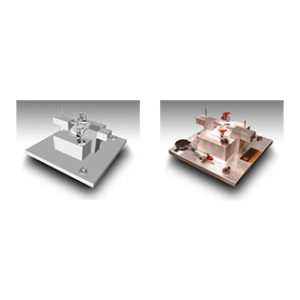
Customers from a wide range of industries including aerospace and automotive contact 3D Engineering Solutions for advanced solutions to their gauge and fixture requirements. We correctly apply GD&T controls to gauge and fixturing designs to meet stringent requirements.
Learn why leading companies trust the professionals at 3D Engineering Solutions for their gauge and fixture needs.
What Is Gauge and Fixture Design?
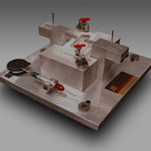
Gauge and fixture design covers the custom tooling used to locate, support, and verify parts during manufacturing and inspection. Gauges confirm that a part meets its dimensional or functional requirements, while fixtures hold a part in a fixed, repeatable position for machining, assembly, or measurement.
At 3D Engineering Solutions, this work is grounded in the same GD&T principles that guide our end-to-end mechanical design services. Each fixture is built around a part’s actual geometry, tolerance callouts, and inspection goals, so operators get consistent results no matter who runs the measurement.
Fixture and Gauge Design for Precision Manufacturing
Fixture and gauge design has a direct effect on quality and throughput on the shop floor. A poorly designed fixture can introduce variation, slow down inspection, and produce unreliable results. Our engineers draw on the same expertise behind our GD&T solutions for manufacturing to keep the design aligned with part requirements and inspection intent.
We build gauge fixtures for dimensional inspection, functional testing, and in-process verification. Whether the application involves CNC machining, assembly, or a broader metrology workflow, each fixture and gauge solution is sized and built for that specific job.
Automotive Gauge and Fixture Solutions
Automotive gauge and fixture work calls for high repeatability, durability, and speed to keep pace with high-volume production. Our solutions meet the standards OEMs and tier suppliers expect, supporting both prototype builds and full production inspection.
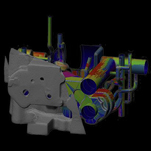
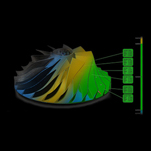
We design gauge fixtures for body panels, structural components, powertrain parts, and interior assemblies. Because body panels and other exterior surfaces are rarely flat, these projects often call on our high-accuracy freeform surface modeling capabilities to capture exact surface data before a fixture is built, so the tooling holds its accuracy across long production runs while cutting inspection cycle time.
Our Gauge and Fixture Design Process
Our process starts with a close review of part geometry, tolerances, and inspection requirements. We look at how the part will be manufactured, measured, and handled to settle on the right fixturing approach, then build digital CAD models to simulate part location, datum reference frames, and operator interaction before anything is cut.
Once a design is finalized, we build and validate the gauge fixture against its performance requirements. When needed, we run inspection and verification on calibrated equipment to confirm the fixture holds accurate, repeatable measurements over its service life.
Gauge Fixture Design for Inspection and Calibration
Gauge fixture design is just as important for inspection and calibration work as it is for production. A properly designed fixture keeps a part positioned the same way every time, which is what makes dimensional verification reliable. Our fixtures work across CMMs, optical systems, and manual measurement tools.
We also support gauge fixture inspection and calibration. Verifying fixture accuracy against NIST-traceable calibration standards and documenting measurement traceability gives manufacturers in regulated environments a documented record of accuracy and compliance they can count on over time.
Industries We Serve
Our gauge and fixture work spans industries that depend on precise measurement and repeatable production, from aerospace and automotive to manufacturing and industrial equipment. Each solution is built around the specific parts, tolerances, and production volumes of that application, supporting first article inspection, production verification, and tooling validation along the way.
Gauge and Fixture Applications by Industry
| Industry | Common Applications | Typical Requirements | Inspection Methods Supported |
|---|---|---|---|
| Aerospace | Structural components, engine parts | Tight tolerances, full traceability | CMM, optical systems |
| Automotive | Body panels, powertrain, interior assemblies | High-volume repeatability, OEM and tier standards | CMM, manual gauges |
| Manufacturing | Tooling validation, first article inspection | Process consistency, dimensional accuracy | CMM, manual measurement tools |
| Industrial Equipment | Assembly fixtures, production verification | Durability, long service life | CMM, optical systems |
Frequently Asked Questions
What is the difference between a gauge and a fixture?
A gauge is typically used to verify part dimensions or functional requirements, while a fixture is used to hold or locate a part consistently during manufacturing or inspection. Many applications combine both into a single gauge fixture.
What industries use gauge and fixture design services?
Gauge and fixture design is widely used in aerospace, automotive, manufacturing, and industrial production environments. Automotive gauge and fixture applications are especially common in high-volume inspection workflows.
Every gauge and fixture we build is designed with GD&T from the first sketch and validated in our ISO/IEC 17025-accredited lab.